By Ashley Newell · April 28, 2026
Bushfire Season and Your Plumbing: Fire Pumps, Tank Water and Clearances in the Adelaide Hills
If you live in the Adelaide Hills, bushfire planning is part of owning your home. The Hills sit inside a declared bushfire-prone area, and the December 2019 Cudlee Creek fire was a hard reminder of how quickly conditions can turn: it burned more than 23,000 hectares, destroyed around 87 homes and swept through towns like Lobethal and Woodside in a single afternoon. Crucially, hundreds of homes that day were successfully defended, and a reliable, well-plumbed water supply is one of the things that makes defending a property possible.
As a licensed plumber and gas fitter working across the Hills, I get asked every summer about fire pumps, tank fittings and keeping water flowing when the power drops out. Here is what actually matters.
Why bushfire prep is partly a plumbing job
When a fire front approaches, mains pressure often falls away as everyone in the area draws water at once, and grid power regularly fails. That means the tap and the electric pump you rely on every other day of the year may give you nothing on the worst day. A proper firefighting setup is independent of the mains and independent of grid power, and getting there is plumbing work: tanks, outlets, pumps, fittings and pipe that will not melt or fail under radiant heat.
Setting up a firefighting supply from your rainwater tank
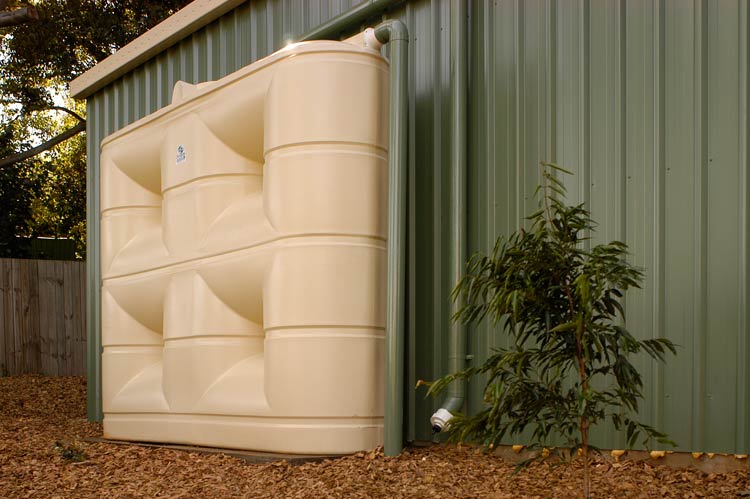
On most Hills blocks your rainwater tank is your firefighting reserve. A few things make it genuinely useful to both you and the CFS:
- A dedicated fire reserve. Fitting your household outlet higher up the tank wall and a separate fire outlet at the base means there is always a body of water held back for firefighting, even after everyday use draws the tank down.
- A CFS-compatible outlet. Fire authorities generally want a 65mm Storz coupling on a metal outlet near the base of the tank, positioned within about four metres of an all-weather driveway so a truck can reach it. Your local council and the CFS set the exact requirement for your block.
- Metal, not plastic, where it counts. Poly pipe and plastic fittings on the outside of a tank can soften and fail in radiant heat. Fire-service outlets and the fittings around them should be metal.
Choosing a fire pump and fittings
Gravity alone rarely gives enough pressure to fight a fire, so a dedicated fire pump matters. Points worth knowing:
- Petrol or diesel, not mains electric. An electric pump is useless if the grid goes down. A petrol or diesel fire pump keeps running regardless.
- Enough capacity. Fire pumps are commonly specified with an inlet of around 38mm and an engine of roughly 3.7kW (5hp) or more so they can push water through hoses at useful pressure. Confirm sizing for your layout.
- Hoses and fittings that match the CFS. Standardised couplings mean crews can connect to your supply quickly.
- Keep it protected and tested. Site the pump where it is shielded from radiant heat, keep fresh fuel on hand, and start it up a few times over summer so you know it runs.
Keeping water available when power and mains fail
Design your system so that losing power does not lose you your water. That usually means a petrol or diesel pump drawing from a tank with a held-back fire reserve, plus enough hose to reach the roofline and all sides of the house. If you rely on an electric pressure pump day to day, have a plan B that does not need the grid. Test everything before the season, not during a total fire ban.
Gas bottle safety and clearances
LPG cylinders are common on Hills properties, and they need respect around fire:
- Keep cylinders and their pressure-relief valves clear of long grass, mulch and stored fuel, and make sure the relief valve points away from the house.
- Know how to turn your gas off at the cylinder, and include that in your bushfire action plan.
- Any changes to gas cylinder installation, pipework or appliances must be done by a licensed gas fitter. Gas work is licensed-only in South Australia for good reason.
- If you ever smell gas or suspect a leak, turn the supply off, keep ignition sources away, and call the gas emergency line on 1800 GAS LEAK (1800 427 532).
After a fire: the plumbing checks that matter
If fire has been through your area, do not assume the water and gas are fine:
- Tank water can be contaminated. Ash, debris and firefighting chemicals, or a melted inlet, can spoil rainwater. Have it checked before drinking, and disconnect first-flush diverters and inlets if the roof is sooty.
- Gutters and stormwater. Ash and burnt debris clog gutters and downpipes fast, so check your stormwater system is clear before the next downpour to avoid overflow into the house.
- Poly pipe may have failed. Melted or heat-stressed pipe and fittings need replacing, not patching.
- Hot water and backflow. A heat-affected hot water unit or damaged backflow device should be inspected before use.
- Gas must be recommissioned by a licensed gas fitter. Do not relight or use gas appliances after a fire until the installation has been checked.
Every Hills town, from Lobethal and the surrounding valleys through to Stirling, has its own access and water quirks, and a local plumber who knows the area is worth having in your phone before summer, not after.
Get your firefighting plumbing sorted before summer
Assigned Plumbing Services is a family-owned, fully licensed plumbing and gas business working right across the Adelaide Hills. If you want your tank outlet, fire pump, gas cylinders or post-fire plumbing checked and set up properly, call us on 0410 063 121 and we will make sure your water is there when you need it most.
Free, no obligation
Got a plumbing job in mind?
From a leaking tap to a complete restoration, Assigned Plumbing covers Adelaide and all surrounding areas with over a decade in the trade. Call Ash today for a free, no-obligation quote.