By Ashley Newell · April 16, 2026
Hot Water System: Repair or Replace? A Guide for Adelaide Homes
A reliable hot water system is one of those things you never think about until the morning it stops working. If your unit is playing up, the big question is whether to spend money repairing it or bite the bullet and replace it. The right answer depends on the age of your system, what has actually failed, and how our local Adelaide conditions have treated it over the years. This guide walks you through the signs of a failing unit, the repair-versus-replace economics, and how to choose the right replacement for your home in Adelaide, the Adelaide Hills or the Murraylands.
Signs your hot water system is on the way out
Hot water units rarely fail without warning. Keep an eye out for these tell-tale signs:
- Water that never gets properly hot, or runs out far quicker than it used to.
- Rusty, discoloured or metallic-tasting hot water, which often points to corrosion inside a storage tank.
- Water pooling or dripping around the base of the unit. A leaking tank is almost always terminal.
- Banging, rumbling or popping noises caused by sediment build-up on the bottom of the tank.
- A pilot light or burner that keeps going out, or an electric element that trips the switchboard.
- Rising energy bills with no change in how much hot water you use.
A single symptom on a newer unit is usually a straightforward repair. Several symptoms together on an older unit is your cue to start planning a replacement.
Repair or replace? The economics
As a rule of thumb, weigh the repair cost against the age and replacement cost of the unit:
- Under 8 years old and a minor fault (thermostat, element, valve, thermocouple) – repair is almost always worth it.
- The 50% rule – if a repair costs more than half the price of a new system, replacement is the smarter spend.
- A leaking tank – replace, every time. Once the inner cylinder corrodes through, it cannot be patched.
- Over 10 years old with recurring problems – repairs tend to snowball, and you are pouring money into a unit near the end of its life.
It also pays to factor in efficiency. A modern unit can noticeably cut running costs compared with a tired 15-year-old system, so the replacement often partly pays for itself over time.
How long should a hot water system last?
Typical lifespans in Australian conditions are:
- Electric storage: around 10 to 15 years
- Gas storage: around 8 to 12 years
- Continuous flow (instantaneous) gas: around 15 to 20 years
- Heat pump: around 10 to 15 years
- Solar hot water: 10 to 20 years depending on the components
These are guides, not guarantees. Installation quality, how often the sacrificial anode was replaced, and local water conditions all move the needle.
Storage, continuous flow or heat pump?
If you are replacing, it is worth understanding the main options rather than simply swapping like for like:
- Storage systems heat and hold water in an insulated tank. They are simple and cost-effective up front, and suit households with predictable demand, but you can run out during back-to-back showers.
- Continuous flow (also called instantaneous or tankless) heats water on demand as it passes through the unit, so you never run out and there is no standby heat loss. With no stored water sitting in a tank, there is also less internal corrosion, which is part of why they tend to last longer.
- Heat pumps work like a reverse-cycle air conditioner, drawing warmth from the air to heat your water. They use a fraction of the electricity of a standard electric unit and are a strong fit for our mild Adelaide climate, where genuinely cold snaps are rare. Government rebates can make the changeover far more affordable.
Sizing it right
Getting the size right matters as much as the type. Too small and you are cold by the third shower; too big and you are paying to heat water you never use. As a general guide, a storage unit is sized on the number of people in the home and peak demand, while continuous flow units are rated by flow rate and the number of outlets running at once. A licensed plumber will size the system to your household, your existing gas or electrical supply, and your daily routine before recommending a model.
Why hard water shortens the life of your unit locally
This is the big local factor many Adelaide homeowners overlook. Much of metropolitan Adelaide and the Murray plains is supplied with hard water – water carrying a high level of dissolved calcium and magnesium. As that water is heated, those minerals drop out as scale and sediment, which collects on tank bases, elements and heat exchangers. The result is reduced efficiency, more noise, hotter-running components and, over time, a shorter working life for the unit. Homes in the Adelaide Hills that rely on softer rainwater tend to see less scaling, but tank sediment and anode wear are still worth watching. Regular servicing – flushing sediment and checking the sacrificial anode every few years – is the single best way to get full value from whichever system you choose.
Talk to a licensed local plumber
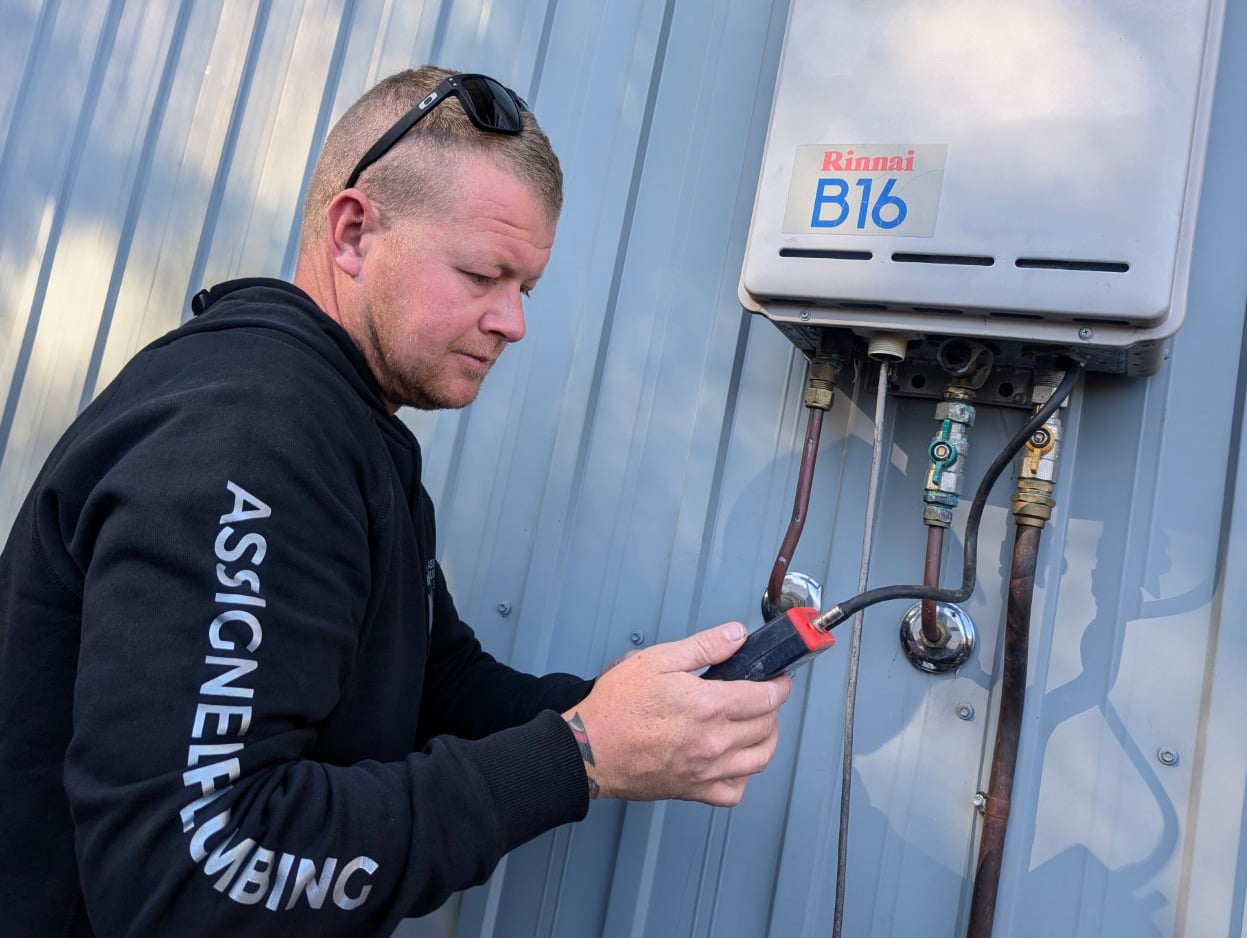
Every home is different, and the repair-or-replace call is easier with an expert set of eyes on the unit. Assigned Plumbing Services can diagnose the fault, give you an honest recommendation, and handle a compliant installation if replacement is the way to go. Explore our hot water systems in Adelaide service for repairs, replacements and new installs. If you have a gas unit, our licensed gas plumber and fitter team can carry out the work safely and to code. And if your hot water has failed completely and you need help fast, our emergency plumbing team is ready to respond.
Not sure whether to repair or replace? Call the friendly team at Assigned Plumbing Services on 0410 063 121 for honest, local advice.
In or around Mount Barker? Here’s how we handle hot water repairs in Mount Barker.
Free, no obligation
Got a plumbing job in mind?
From a leaking tap to a complete restoration, Assigned Plumbing covers Adelaide and all surrounding areas with over a decade in the trade. Call Ash today for a free, no-obligation quote.